1998 Hyundai Accent X3 G 1.5 SOHC Service Manual (P/N 09793-21000)
790 Pages • 11.45 MB • Instant, Printable PDF


Hyundai Models Covered & Key Technical Specifications
Models: Accent (X3)
Sub-models / Variants: 3-Door, 4-Door, GL, GLS, Sporty Pack, M/T (Manual Transmission)
Model Years: 1998
-
Glass thickness (windshield): 5 mm (0.20 in)
-
Glass thickness (door/rear fixed): 3.2 mm (0.13 in)
-
Cigarette lighter load capacity limit: 120 W
-
Door hinge to body torque: 35–42 Nm (26–31 lb-ft)
-
Hood hinge to body torque: 22–27 Nm (16.2–20 lb-ft)
-
Front seat to floor bolt torque: 35–55 Nm (25.3–40 lb-ft)
-
Trunk lid hinge to body torque: 7–9 Nm (5–6.5 lb-ft)
Hyundai Manual Features & Content Preview
- Covers 1998 Hyundai Accent X3 models (3-door and 4-door), including G 1.5 SOHC engine documentation
- Official Hyundai service publication (P/N 09793-21000), originally sourced from the 1998–2001 master technical binder
- 762-page PDF of body, electrical, and mechanical reference data, featuring dimension mapping and component-level teardown sequences
- Contains detailed body dimension reference tables, wiring diagrams, connector pinouts, and hardware torque specifications
- Explores the A4AF2 automatic transaxle, M5AF3 manual transmission, Anti-lock Brake System, MacPherson strut suspension, and power steering assemblies
- Highlights the MFI control system, SRS airbag modules, evaporative emission canisters, idle speed control actuators, and HVAC compressor circuits
Body Dimension and Interior Teardown
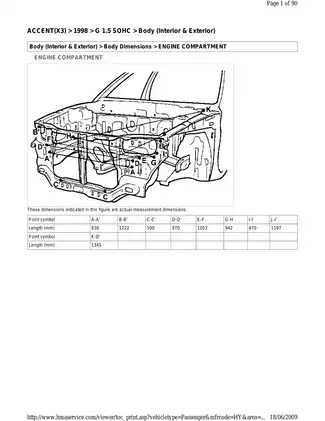
This technical reference maps out the body structure of the 1998 Hyundai Accent. It delivers standardized linear distance metrics for the engine compartment, under-body, side panels, and trunk areas. Shop technicians tracking collision damage will find the precise hole centers and reference points necessary for frame alignment and structural repair. The literature also breaks down interior trim removal. It covers the crash pad, center console, door panels, and pillars. By identifying mounting hardware and hidden fasteners, the guide helps you follow the manufacturer-recommended layout for both trim levels without breaking brittle interior plastics.
Electrical Systems and Diagnostic Data
The electrical documentation dives directly into the audio, lighting, and restraint systems. You get specific sequences for removing radio units, speakers, and instrument cluster components. Wiring diagrams and pinout tables define exact terminal assignments for the factory audio and MFI control networks. Diagnostic references provide test conditions for checking speaker impedance and lamp rheostat intensity. Detailed tables list tightening torque specifications for critical body components like door hinges, seat belt anchors, and hood latches. Because working with automotive electrical circuits and supplemental restraints carries inherent risks of injury or vehicle damage, all procedures must be executed safely using proper protective gear and established shop protocols. Finally, a special tools index assists with windshield glass removal and precise panel gap adjustments.
Powertrain, Chassis, and Troubleshooting
Going far beyond the exterior shell, this manual supplies the detailed mechanical data required to perform routine maintenance on the vehicle's drivetrain and chassis. It provides step-by-step instructions for tasks that typically mandate an expensive trip to the repair shop, such as timing belt replacement, A4AF2 automatic transaxle valve body overhauls, and front suspension strut disassembly. By detailing exact multimeter specifications to test engine sensors at the ECM harness, this resource prevents blind parts swapping and directly improves daily workshop efficiency. Technicians can efficiently trace complex faults using dedicated visual aids, including schematic diagrams, hydraulic system diagrams, timing charts, shift pattern charts, and diagnostic trouble code charts.
When servicing the G 1.5 SOHC engine, technicians must navigate specific mechanical traps. For instance, rotating the crankshaft counterclockwise during a timing belt tensioner adjustment will cause improper base tension and subsequent belt failure. Furthermore, prior to installing the steering wheel or column, the front wheels must be perfectly centered to align the SRS clock spring neutral marks; failing to do so will tear the internal ribbon cable and destroy the airbag circuit the first time the wheel reaches full lock.
Customer Reviews
Read what our customers say about this Hyundai Car manual and share your own experience.